
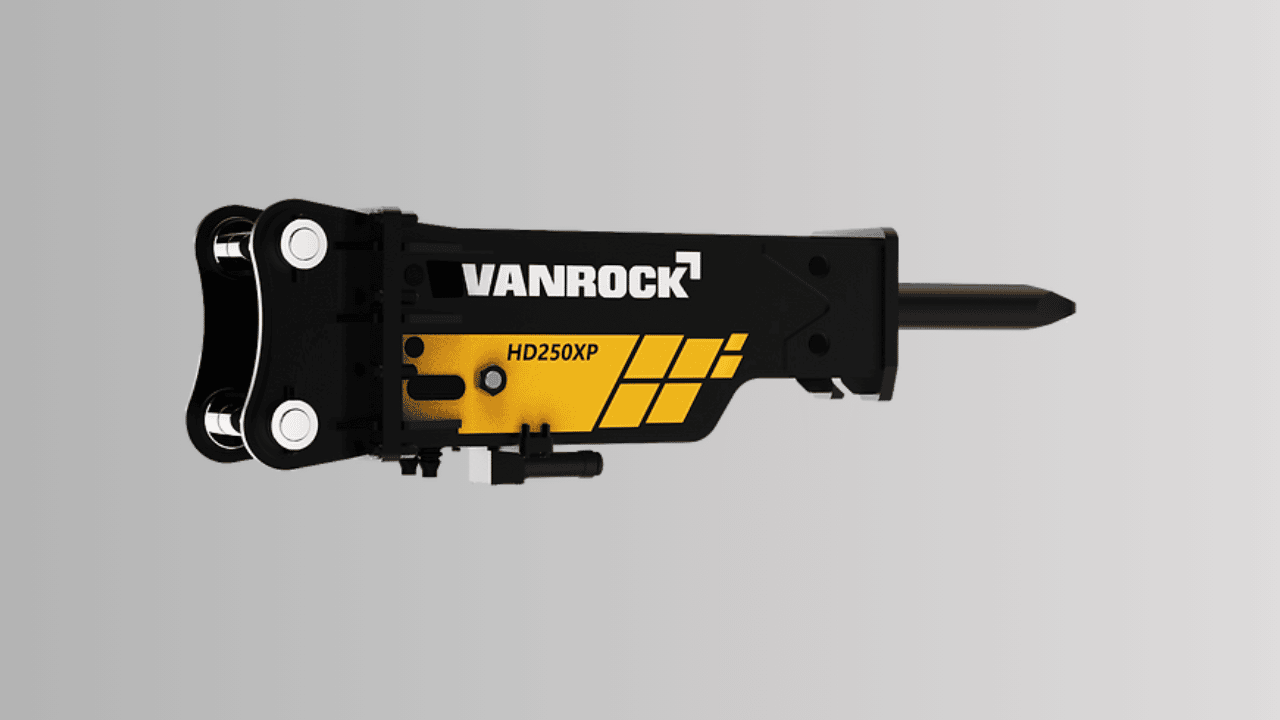
Choosing the right rock breaker for your excavator is not only about price. The breaker must match your excavator tonnage, hydraulic flow, operating pressure, application, and site conditions.
In India, rock breakers are widely used for road construction, quarrying, demolition, trenching, foundation work, mining support, and hard rock excavation. A wrongly selected breaker can reduce productivity, damage the excavator, increase chisel wear, and create unnecessary downtime.
1. Match the Breaker to Your Excavator Size
The first step is to check your excavator’s operating weight. Every hydraulic rock breaker is designed for a specific carrier range.
If the breaker is too small, it will not deliver enough breaking force. If it is too large, it can damage the excavator boom, arm, pins, bushings, and hydraulic system.
Before buying, always confirm compatibility with your excavator model, such as:
- Tata Hitachi EX200 / ZX200
- SANY SY215
- Komatsu PC200
- CAT 320
- Hyundai 210
- Volvo EC210
- Kobelco SK220
2. Check Hydraulic Flow and Pressure
A rock breaker works through the excavator’s hydraulic system, so the oil flow and pressure must match the breaker requirements.
Check:
- Required oil flow
- Operating pressure
- Back pressure
- Hose size
- Piping kit compatibility
Incorrect hydraulic matching can cause weak impact, overheating, seal damage, and poor breaker life.
3. Choose Based on Application
Different jobs require different breaker specifications.
Road Construction
For asphalt, concrete, and road widening work, choose a breaker with good impact frequency, easy serviceability, and proper tool options.
Quarrying and Hard Rock
For boulder breaking and quarry use, choose a heavy-duty breaker with high impact energy, strong front head, durable bushes, and good chisel life.
Demolition
For urban demolition, a box type / silenced rock breaker is often preferred because it offers lower noise, lower vibration, and better component protection.
Trenching and Foundation Work
For narrow excavation and hard strata, tool selection and breaker control are very important.
4. Choose the Correct Chisel Tool
The chisel directly affects productivity and wear life.
Common tool options include:
- Moil Point: general rock and concrete breaking
- Chisel Tool: trenching and layered rock
- Blunt Tool: boulder breaking and quarry work
- Asphalt Cutter: road and asphalt applications
Using the wrong chisel can lead to frequent tool breakage and lower productivity.
5. Check Key Features Before Buying
A good rock breaker should offer more than just impact power. Look for:
- Anti-blank firing protection
- Hydraulic accumulator
- Durable sealing system
- Greasing or auto-greasing option
- Multiple tool options
- Strong spare parts support
- Reliable service backup
These features are especially important for Indian conditions where machines often work in heat, dust, hard rock, and long duty cycles.
6. Think Cost Per Hour, Not Just Purchase Price
The cheapest breaker is not always the most economical. A low-cost breaker may lead to:
- Higher chisel wear
- Frequent seal replacement
- More downtime
- Lower productivity
- Higher fuel consumption
- Shorter machine life
A better way to compare rock breakers is by checking total cost per hour, including spare parts, maintenance, downtime, and productivity.
To choose the right rock breaker for your excavator in India, focus on machine compatibility, hydraulic matching, application, tool selection, durability, and after-sales support.
The right breaker improves productivity, reduces downtime, protects your excavator, and gives better long-term value.
If you are unsure which breaker suits your machine, share your excavator model, tonnage, application, and rock type with Vanrock. Our team can help recommend the right hydraulic rock breaker for your job site.